The problem
An independent truck dispatcher juggles load boards, spreadsheets, email and the phone all day. Finding new carriers, checking their paperwork, picking a load that actually pays once empty miles and fuel are counted, and chasing brokers for payment all happen in different places. One missed detail, like expired insurance or a rate confirmation that doesn’t match the call, costs a carrier real money.
What we built
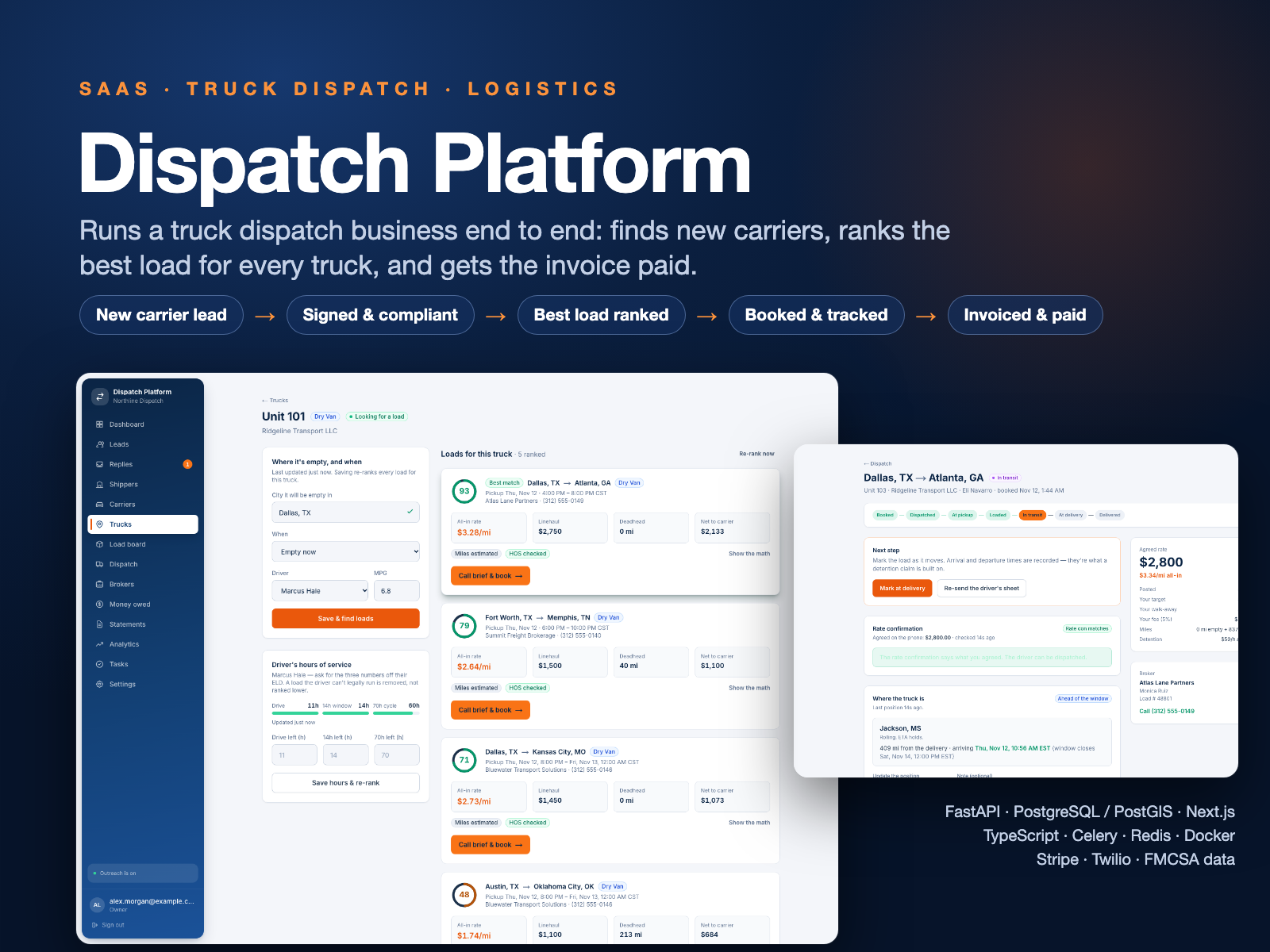
Dispatch Platform puts the whole dispatch business in one workspace.
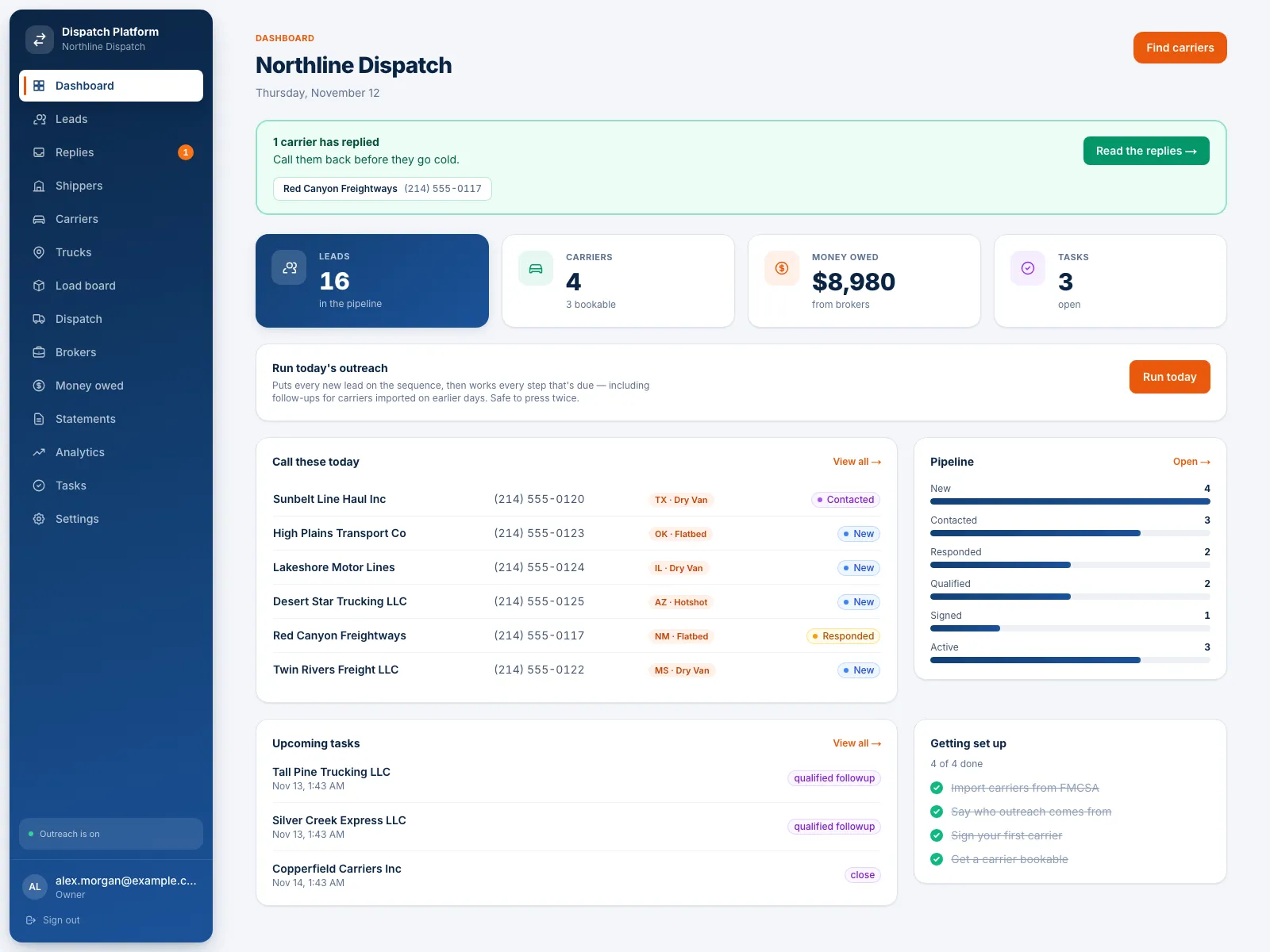
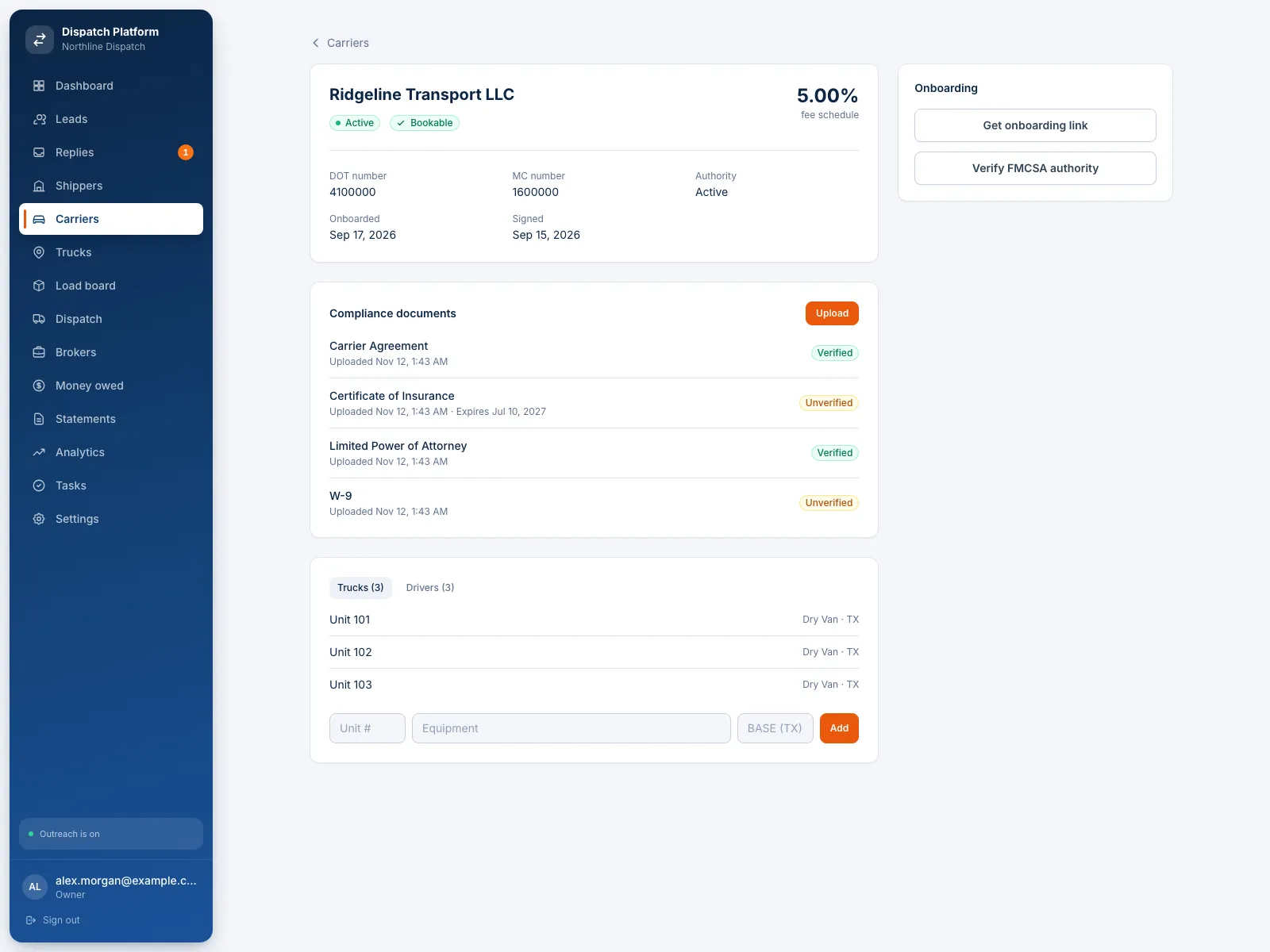
New carriers are imported from federal FMCSA records, scored and contacted through outreach that only goes to people who agreed to hear from you. They join through a private link, where they sign the agreement and upload their insurance and documents. The system won’t let anyone book a carrier until everything required is signed and current.
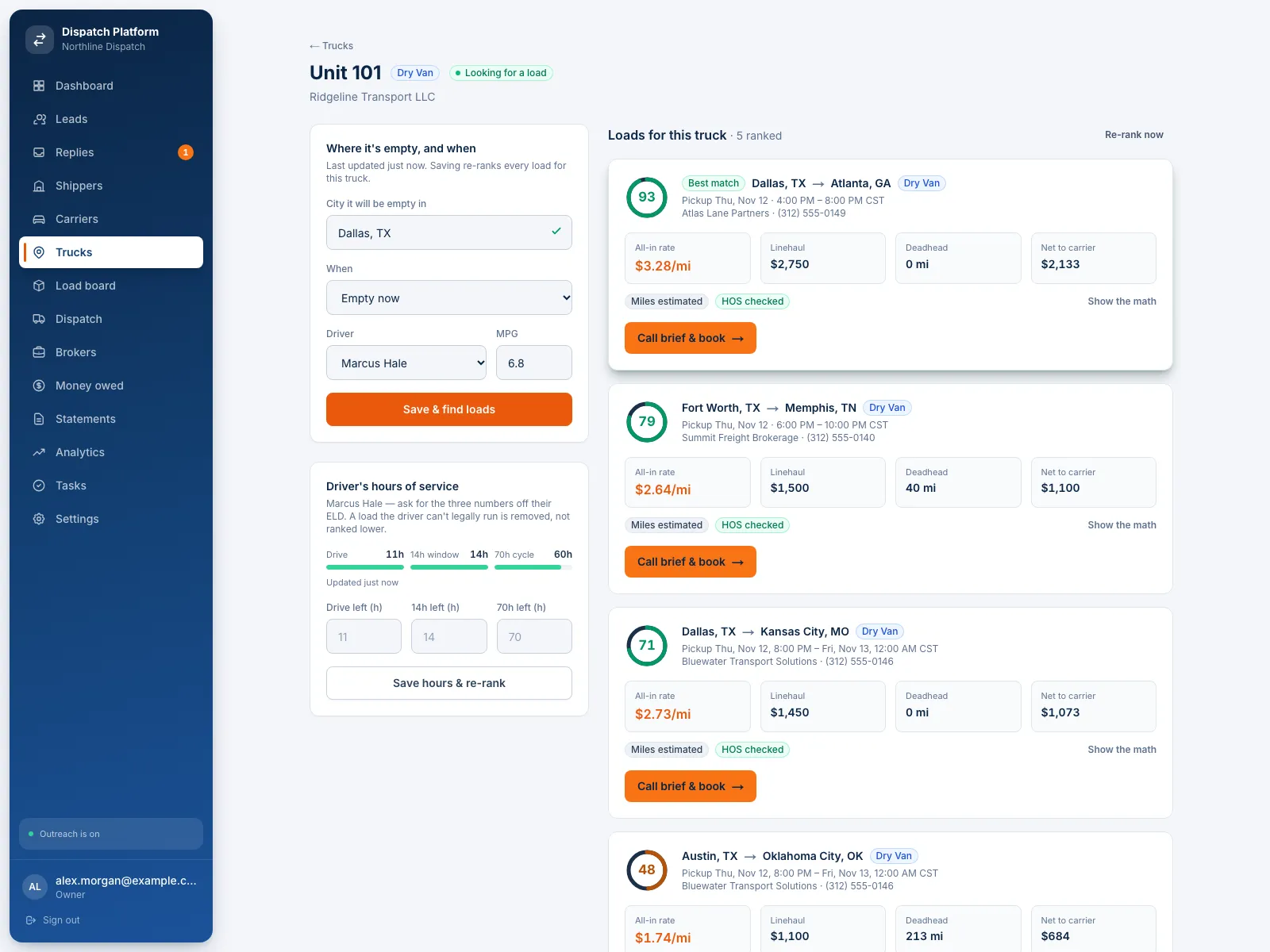
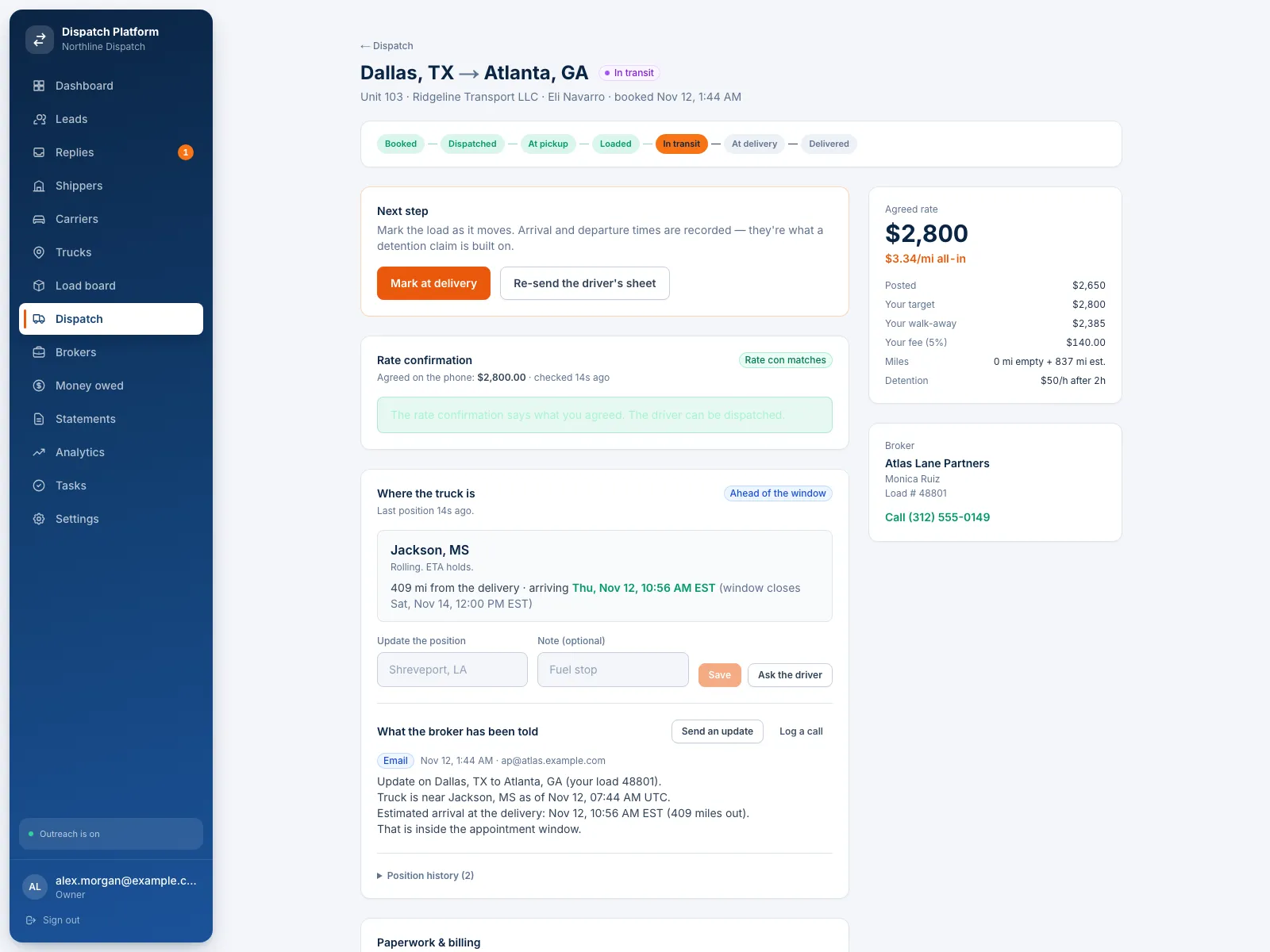
For every truck, the platform ranks open loads by the all-in rate per mile, after empty miles and fuel, and removes any load the driver can’t legally run on their remaining hours of service. After the call, it checks the broker’s rate confirmation against the agreed rate, tracks the load to delivery, invoices the broker and bills the carrier its dispatch fee.
- Carrier growth: FMCSA imports, lead scoring, consent-based email and SMS, and reply tracking.
- Load matching: ranking by real profit, radius search on the map, and driver hours of service.
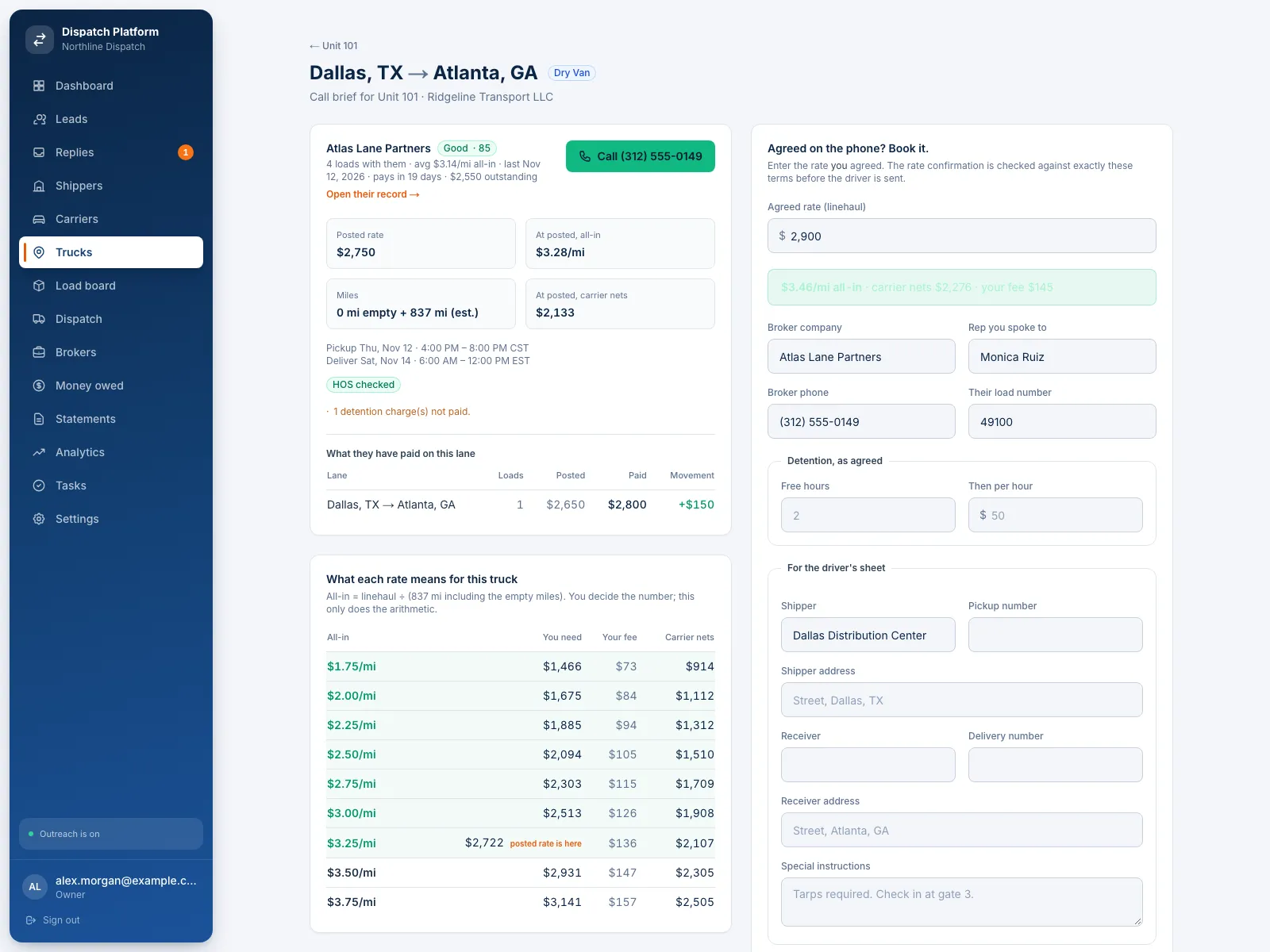
- Booking and tracking: call briefs with a rate ladder, rate confirmation checks, driver check-ins and proof of delivery.
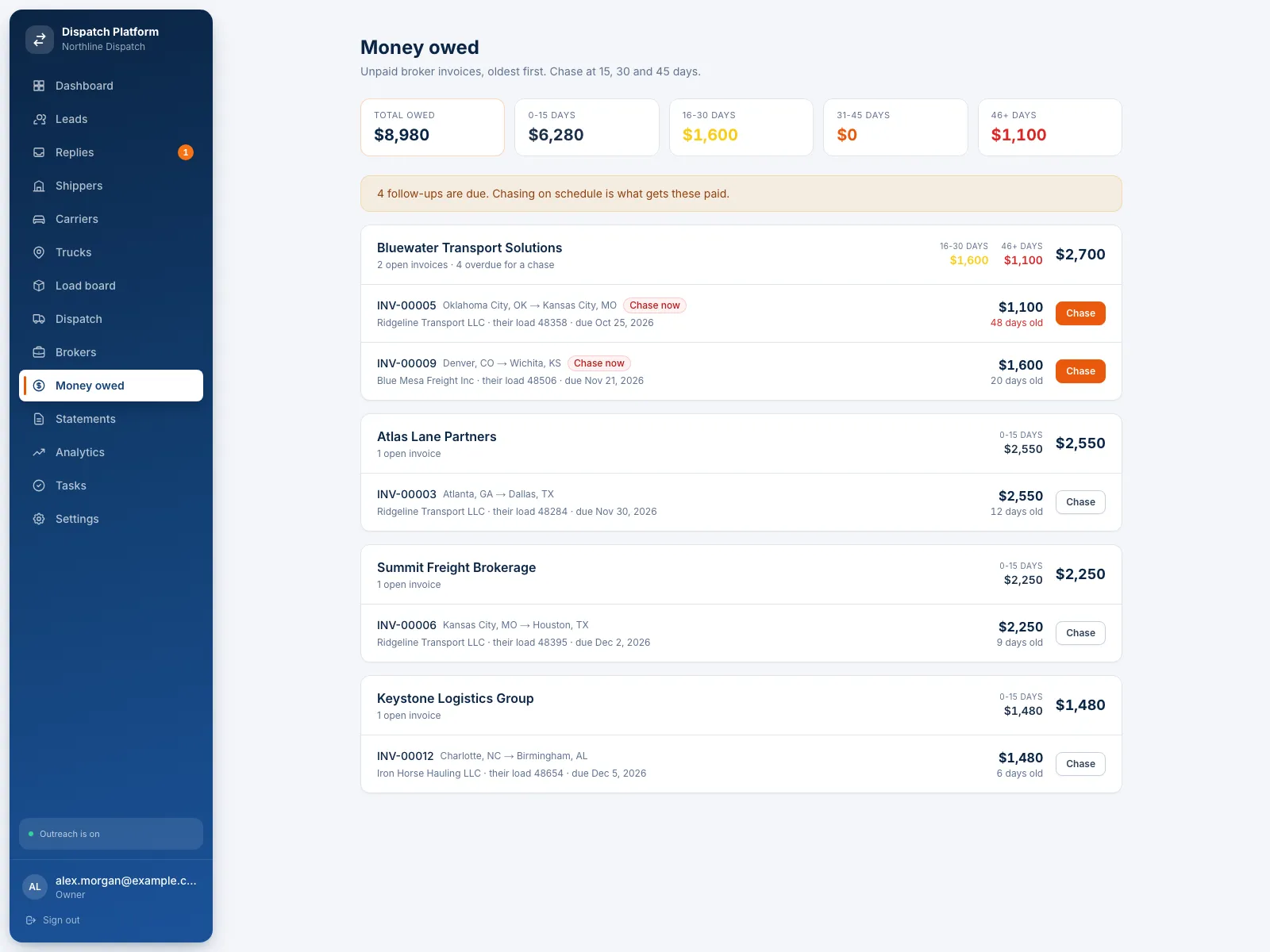
- Getting paid: broker invoices, overdue follow-ups, carrier statements and broker scorecards.
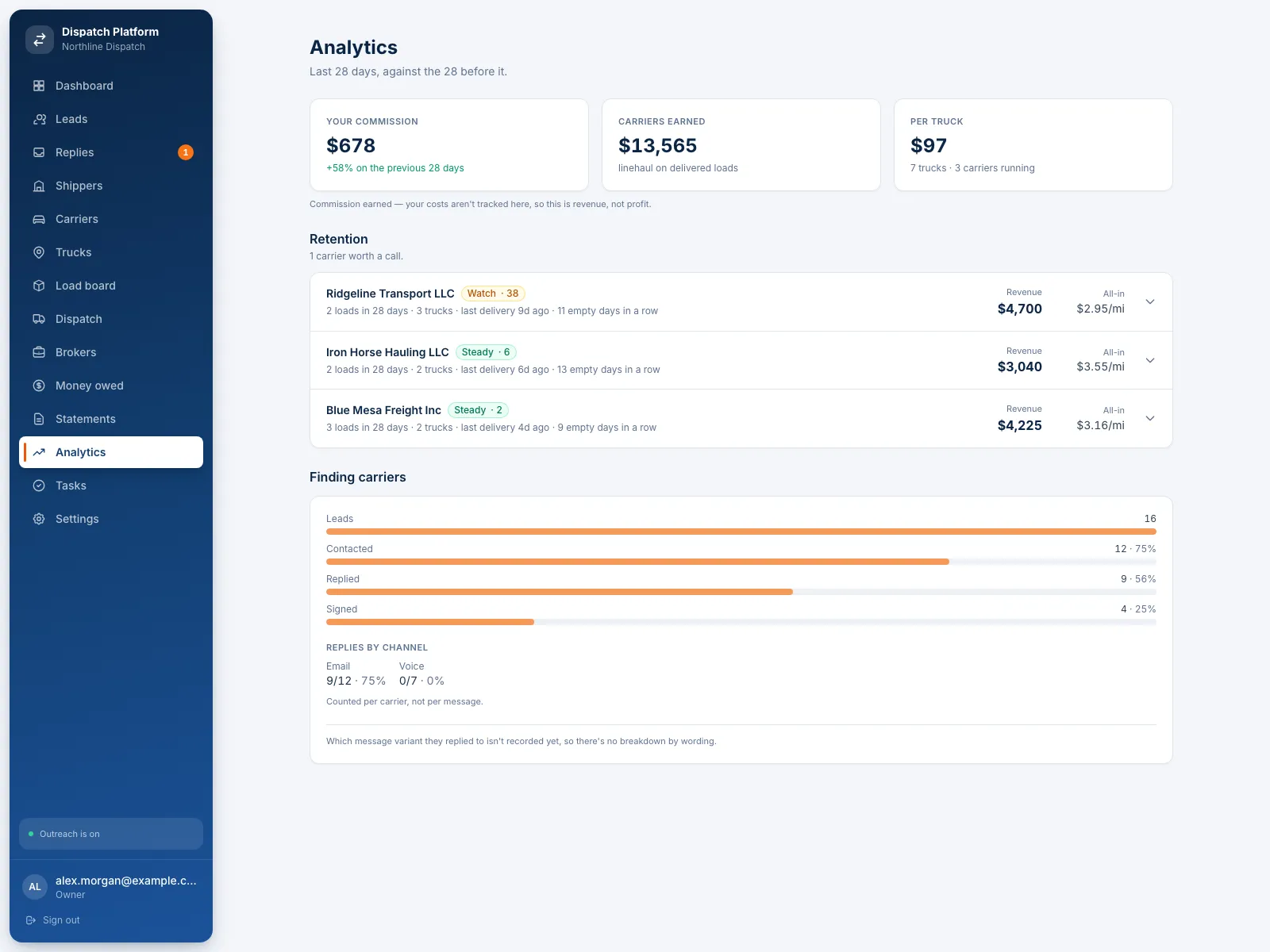
- Analytics: commission, carrier retention and the lead funnel.
Built to run as a business
A multi-company SaaS with each dispatch company’s data kept separate, role-based access, live updates in the dashboard, and background jobs for outreach and follow-ups. It’s backed by more than 780 automated tests, continuous integration and Docker deployment.
What it shows we can do
Modelling a complex industry with real rules (compliance, hours of service, money flows), turning public records into a lead source, and automating the follow-ups that a small team would otherwise forget.