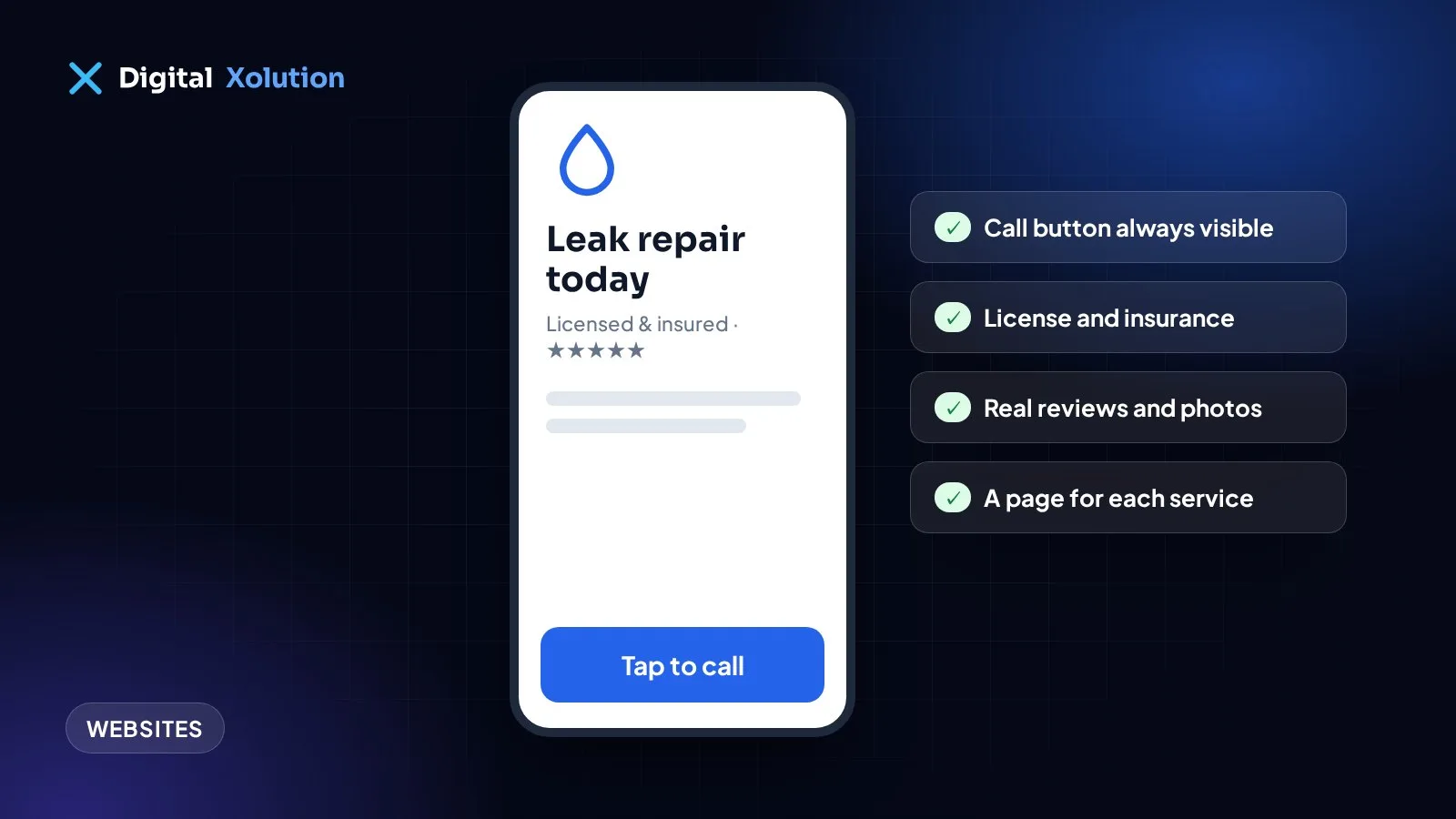
Nobody browses plumbing websites for fun. They're standing in a wet kitchen, or they've been putting off a dripping water heater and finally have a free moment. They'll look at a few sites on their phone and call whichever one seems reliable and easy to reach.
Your website only has to do that job well. Here's how to check it.
For the customer with an emergency
1. A tap-to-call button that's always visible. On mobile, keep your number on screen as visitors scroll. Test it from your own phone.
2. Clear emergency information. If you offer 24/7 service, say so at the top of the homepage, and explain what it covers. If you don't, list your hours clearly so people aren't left guessing.
3. Your service area near the top. "Serving Madison, Sun Prairie and Middleton" tells a visitor straight away that they've come to the right place.
4. A page that loads quickly on a phone. Someone with a leak won't wait. Check it using Google's free PageSpeed Insights, and start with oversized images.
5. A short "while you wait" tip. A note such as how to shut off the water supply is genuinely useful, and it builds trust before you've even arrived.
For the customer comparing companies
6. Your license and insurance details. Requirements vary by state, so show what applies to you, and include your license number where it's relevant.
7. Reviews near your phone number. Show your Google rating and a few real reviews that mention specific work. Link to your Google profile so people can verify them. Short on reviews? Read how to get more Google reviews.
8. Real photos. Your van, your team, finished work. Stock photos of a smiling model holding a wrench don't reassure anyone.
9. How you price. You don't need to publish exact prices, but do explain how pricing works. Do you charge a call-out fee? Do you give a quote before starting? Customers worry about this, and clear answers set you apart.
For Google and for bigger jobs
10. A separate page for each main service. Drain cleaning, water heaters, leak repair and sewer lines each deserve their own page. Each should say what the problem looks like, how you fix it, the areas you cover and how to book. Someone searching "tankless water heater install" should land on exactly that.
11. Pages for the towns you serve. Write about real jobs and real local details, rather than copying the same text with a new town name. Our guide to service area pages shows how.
12. A simple request form. Ask for name, phone, the problem and the address or town. Let people add a photo if you can, because it helps you prepare. Then make sure someone sees each request quickly, and send it to more than one person if that helps.
Mistakes we often see on plumbing sites
- A homepage that talks about the company, not the customer. "Family owned since 1998" is nice to know, but put "Leak repair today in Madison" first.
- Hiding the phone number on a contact page. It should be everywhere.
- Only one "Services" page. It makes you harder to find for specific jobs.
- Forms that nobody receives. Test yours each month.
- Old promotions. An expired coupon makes the whole business look neglected.
Your website is only half of it
Plenty of plumbing calls come straight from Google Maps. Make sure your Google Business Profile has the right categories, hours and photos, and that your details match your website. And think about who answers when you're under a sink: a great website doesn't help if calls go unanswered. Our post on what missed calls cost can help you work out what that's worth.
How did you score?
- 10–12: you're in good shape. Focus on reviews and more local content.
- 6–9: a few focused changes could bring more calls.
- Under 6: your site is likely sending customers to your competitors.
Want more calls from your website? See how we work with home service businesses, or take a look at our website design service. You can also get a free audit with a plain-English list of what to fix first.